Describe Your Idea - Get an Instant Tech & Cost Estimate

Answer 2 quick questions to estimate your project cost.

Tech Insights

Your gateway to the latest tech knowledge, trends, and innovations across industries

Tech insight visualization

Will AI Fully Automate the Software Development Life Cycle by 2030?

The debate over AI's role in automating the Software Development Life Cycle (SDLC) continues to intensify, especially as advancements in AI coding tools proliferate. This article examines the trajectory and capabilities of AI, particularly focusing on how reinforcement learning (RL) has enhanced its effectiveness in coding tasks. AI's capacity to handle complex coding challenges is evidenced by successful implementations in leading companies. For instance, AI agents have proven their worth by autonomously managing enormous codebases, completing tasks in a fraction of the usual time. Likewise, successful platforms like Lovable and Base44 illustrate AI's potential to generate applications from simple user inputs, although with current limitations. Developers are seeing accelerated coding speeds, with substantial portions of code now AI-generated. While the automation of certain phases within the SDLC has achieved significant milestones, a fully automated process might still require human oversight. By 2030, it’s anticipated that AI will be capable of autonomously delivering working code based on human specifications, shifting human roles from execution to guidance in the development process.
Tech insight visualization

Spec-Driven Development and the Future of Software Engineering

The rise of Spec Driven Development (SDD) necessitates a reevaluation of the belief that software engineering can never be fully automated. The original assertion, that software engineering encompasses more than just coding—such as requirements gathering and business analysis—remains significant. While tools powered by Large Language Models (LLMs) can assist developers, they can't supplant the multifaceted skills required in software engineering. The recent emergence of SDD introduces an additional abstraction layer to coding practices, potentially reducing human intervention in software development. SDD demands comprehensive specifications that guide the development process, prompting questions about whether this represents a move towards complete automation in software development. As discussed by Simon Martinelli in the 'AI Unified Process' framework, requirements become the core reference point, placing human 'specification engineers' at the forefront of the development process. This transformation emphasizes the importance of accurately capturing business requirements to prevent poorly aligned software outcomes, which AI cannot rectify alone. Moreover, as the focus of software development shifts away from merely building code to defining what should be built and why, the potential threat of 'Cognitive Debt' looms large. If teams rely excessively on AI-driven approaches without thorough human oversight, they risk losing an understanding of their codebase, leading to challenges in system maintenance. Therefore, while coding can be automated, the field of software engineering—as an intricate amalgamation of business needs, architecture, and intent—remains vital and irreplaceable.
Tech insight visualization

Will AI Fully Automate the Software Development Life Cycle by 2030?

The discussion regarding AI's capability to transform the Software Development Life Cycle (SDLC) by 2030 has garnered significant attention. With advancements in artificial intelligence, particularly reinforcement learning, AI tools are now more adept at understanding user requirements and providing accurate solutions. Historically, models learned primarily from data sets, but recent developments allow them to learn by doing, swiftly improving their performance over time. Throughout various stages of development—planning, implementation, testing, code review, deployment, and monitoring—AI is poised to enhance efficiency. For instance, companies like Lovable and Base44 demonstrate the potential of AI in generating applications from user specifications, showcasing remarkable user engagement and output. Furthermore, organizations like Google report that over 30% of their new code utilizes AI technologies, reinforcing the growing trend of incorporating AI into development processes. The future vision suggests that by 2030, while complete automation remains theoretical, significant portions of the SDLC may operate with minimal human intervention. Humans may transition from direct coding roles to overseeing AI systems that autonomously produce and manage code, marking a shift in the dynamics of software development. Consequently, this evolving landscape demands strategic consideration for CTOs and enterprise tech buyers in Europe and the UK, as they adapt to the implications of AI-driven development practices.
Tech insight visualization

AI-Assisted Coding: Unpacking the Myths of Productivity

In recent discourse surrounding AI-assisted coding tools, there's a growing skepticism about their promised productivity boosts. Initially, optimism surrounded tools like Claude Code, which seemed to facilitate quick solutions. However, as time has passed, many developers, including the author, have observed a trend leaning towards 'slot-machine based development.' This approach, where developers repeatedly trigger AI tools hoping for satisfactory outputs, often leads to the loss of a coherent mental model of code structure. The author argues that while the illusion of rapid development can be enticing, true productivity lies in the quality and reliability of the code produced. Additionally, reliance on AI-generated code can create further complications. As exemplified through various personal experiences, the generated code tends to lack established best practices and coherent organization, leading to difficult refactoring and debugging processes. The convenience factories may introduce unnecessary complexity that ultimately undermines developer efficiency. This raises critical questions for European businesses as they navigate the balance between employing innovative AI solutions and maintaining quality control in their software development practices. The narrative surrounding AI's capabilities needs reevaluation. Developers may need to prioritize enhancing their foundational skills rather than relying solely on AI assistance, which could culminate in a detrimental cycle of skill atrophy. Thus, while AI can augment productivity, it's vital for professionals to remain the primary architects of their software and be aware of the contextual limitations of these tools.

What our Founder says?

Our Purpose is Uniting cutting-edge technology and human expertise to accelerate growth

Director Cover

“Don’t overthink—just begin. Every great journey starts with a single step. I’ll stand with you, support you, and grow with you at every stage. That’s my promise, and I stand by it.”

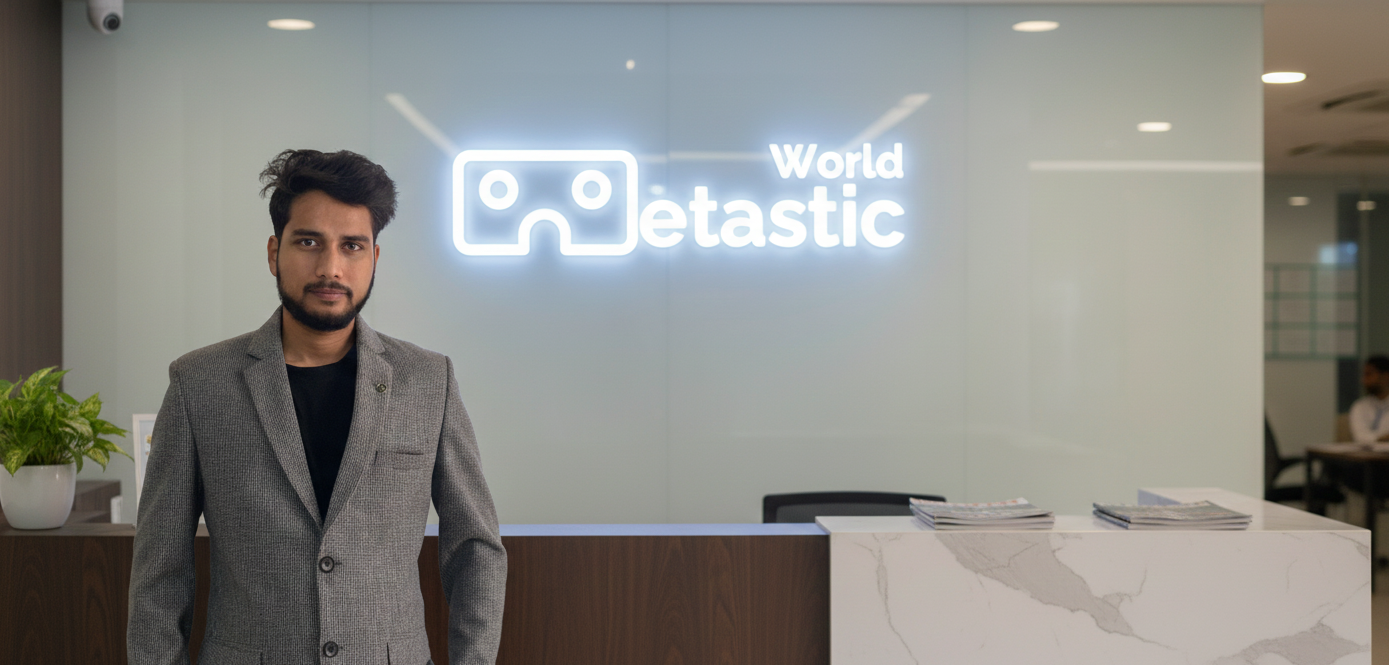
Dheeraj Kumar Singh · Founder, Metastic World Private Limited

Areas of Expertise

End-to-End Digital Product Design, Engineering, and AI-Driven Innovation

Product Strategy & Experience Design

Crafting intuitive digital experiences through strategic wireframes, rapid MVP development, and high-fidelity prototypes to validate ideas before full-scale implementation.

Full-Cycle Product Engineering

Comprehensive design and development across cutting-edge platforms using modern technology stacks including Flutter, React Native, Java, Django, Python, Node.js, Next.js, and React.js.

Infrastructure Automation & Deployment Excellence

Streamlined CI/CD pipelines, multi-cloud orchestration, DevOps, and AIOps services ensuring scalable, secure, and resilient post-deployment environments.

AI & Machine Learning Enablement

End-to-end model training, optimization, and deployment handled by expert data scientists and ML engineers to unlock predictive intelligence and data-driven insights.

Intelligent API Ecosystem Integration

Seamless integration of third-party APIs, RESTful services, SOAP interfaces, and real-time workflows for robust interoperability and scalable system connectivity.

Business Process Automation & Autonomous AI Agents

From lead capture to customer support automation, optimizing entire workflows using AI-powered agents, CRM integrations, and intelligent decision-making systems.

Offshore Technology Operations & Managed Services

Comprehensive managed services and offshore development teams for cost-effective technology solutions.

EdgeCore Automation Systems (IoT)

Secure IoT device provisioning, edge AI, industrial protocols (MQTT/OPC‑UA), and fleet management.

Our Success matrix

As a leading development company, Metastic World ensures client satisfaction with on-time delivery, strict SLAs, high-quality deliverables, and strong client retention

  • Tailored engineering that fits your product, roadmap, and scale, ensuring every feature is built to match your long-term technical and business goals.

Custom Development & Professional Coding

We turn your ideas into reality with tailored web and mobile app solutions, backed by robust coding, system design, and documentation.

Our engineering teams design and build secure, maintainable software using modern architectures, clean patterns, and rigorous code review. From prototyping to production hardening, we provide documentation, testing, CI/CD, and performance tuning so your product ships reliably and scales with your growth.

Want to Become our Partner?

Join our network of successful partners and unlock new opportunities for growth and collaboration in the digital landscape.

Let's Collaborate