Share your vision — get an instant tech & budget estimate

Tech Insights

Your gateway to the latest tech knowledge, trends, and innovations across industries

Tech insight visualization

AI is Not the End of Programmers

With over four decades in programming, the author reflects on historical predictions of technology rendering programming obsolete, including past claims around tools like Visual Basic, UML, and low-code platforms. Contrary to these predictions, the demand for programmers has only increased, as highlighted by Jevons Paradox, indicating that technological advancements lead to more programming needs rather than less. This cycle resumes today with the rise of AI and Large Language Models (LLMs), yet these advancements often seem to complicate rather than simplify programming processes, leading to slower, less reliable outcomes for many teams. The real challenge remains the translation of human thought into precise computational logic—something that LLMs cannot replicate effectively. Despite them making programming tasks accessible, the underlying complexity of programming requires a deep understanding that differentiates trained programmers from machines. Historical cycles show that while automation tools emerge, the nuanced understanding necessary for programming continues to be in high demand, highlighting the ongoing necessity for skilled programmers in an evolving tech landscape. This persistent need is compounded by recent trends in employment and economic factors influencing the tech industry. The claim that AI is significantly replacing developers is unfounded; rather, it's overhiring and economic shifts that are reshaping the workforce. The author concludes that as advancements unfold, the role of programmers will remain crucial for the foreseeable future, cementing their place in the tech ecosystem despite ongoing innovation.
Tech insight visualization

Software Development is an Art: Insights and Observations

In the ever-evolving landscape of technology, software development has increasingly been viewed as an art rather than a pure science. The underlying principles and practices shaped by seasoned developers highlight the necessity of understanding certain 'laws' of development. A central observation is that successful projects can typically be executed by a small team of exceptionally capable programmers. If the software cannot be built with a team of ten or fewer, it's likely that either the idea isn't feasible or the team lacks the appropriate skill set. This understanding reflects a core tenet from the Agile Software Development Manifesto, which emerged from collaboration at Snowbird in 2001 among top developers. Additionally, the clash between theory and practice is a recurring theme in software development. Many developers, driven by theoretical models like the Minimum Viable Product (MVP), sometimes overlook practical necessities, such as the need for comprehensive logging before product launch. This oversight can lead to significant complications, highlighting that in practice, real-world experience often supersedes theoretical guidelines. Moreover, organizational dynamics play a crucial role in software project success. Leadership grounded in direct engagement with teams—often termed 'management by walking around'—is more effective than relying solely on metrics, which can oversimplify complex realities. Recognizing that every project carries its legacy, whether it be from past experiences or existing expectations, is essential. Such insights call on tech leaders to foster environments where growth is promoted over stagnation, ultimately guiding their teams toward successful outcomes in a competitive landscape.
Tech insight visualization

Lego and Software Development: Lessons in Assembly

The journey of a software developer can often mirror the experiences of assembling Lego sets. The author draws parallels between Lego assembly and coding, illustrating how both require creativity, patience, and the ability to troubleshoot. Early experiences with Lego instilled the importance of building skills with various pieces, akin to working with libraries and frameworks in software development. Current practices often lead to a chaotic assembly of components, reminiscent of a 'Frankenstein solution' that lacks clarity and efficiency. Modern software development can become cumbersome, with developers sometimes forced to 'glue' components together that were not originally designed to fit, leading to maintenance nightmares and performance issues. A critical issue is the notion of 'vibe coding,' where emphasis is placed on the end product rather than the code itself, often resulting in projects that become too convoluted to manage. Just as the author uses tools such as LED panel lamps and pre-sorting bricks for effective assembly, developers can adopt strategies to streamline their processes and enhance clarity, ensuring a more structured and coherent build. Ultimately, the author shares a personal anecdote about their struggles with vision while assembling models, further emphasizing the need for a clear methodology in programming. In this analogy, applying thoughtful approaches to coding will lead to greater satisfaction and success in the long run—highlighting that both coding and Lego assembly can be joyful and rewarding experiences when approached with care and foresight.
Tech insight visualization

A Clean, Fast Build Watcher for Zig

The article presents Vigil, a clean and fast build watcher specifically designed for Zig programming. It provides users with enhanced control over the build output compared to Zig's built-in watch mode. Vigil is ideal for developers seeking additional features while managing project builds, especially when working with ziglings in full mode where Zig's default functionality may falter. The project is not only a tool but also a learning exercise in Data-Oriented Design, yieldings insights into Zig patterns and programming practices. Developers working primarily on Linux and MacOS will find compatibility, while Windows users are invited to provide feedback on performance. A notable aspect of Vigil is its focus on safety, utilizing assertions throughout the codebase, particularly under the ReleaseSafe mode. This ensures added reliability when conducting builds. The system efficiently manages file watching while ignoring irrelevant directories, automatically debouncing file changes for effective build processes. However, users should be aware of potential output limitations with large builds, prompting them to manage excessive output effectively. For interested developers, further architectural insights are shared in the accompanying ARCHITECTURE.md documentation. Overall, Vigil offers a robust and enhanced alternative for Zig development, encouraging programmers to leverage its features for improved project handling and execution. By uniting a useful tool with a commitment to learning, developers can experience both practical benefits and knowledge growth.

What our CEO says

Our Purpose is Uniting cutting-edge technology and human expertise to accelerate growth

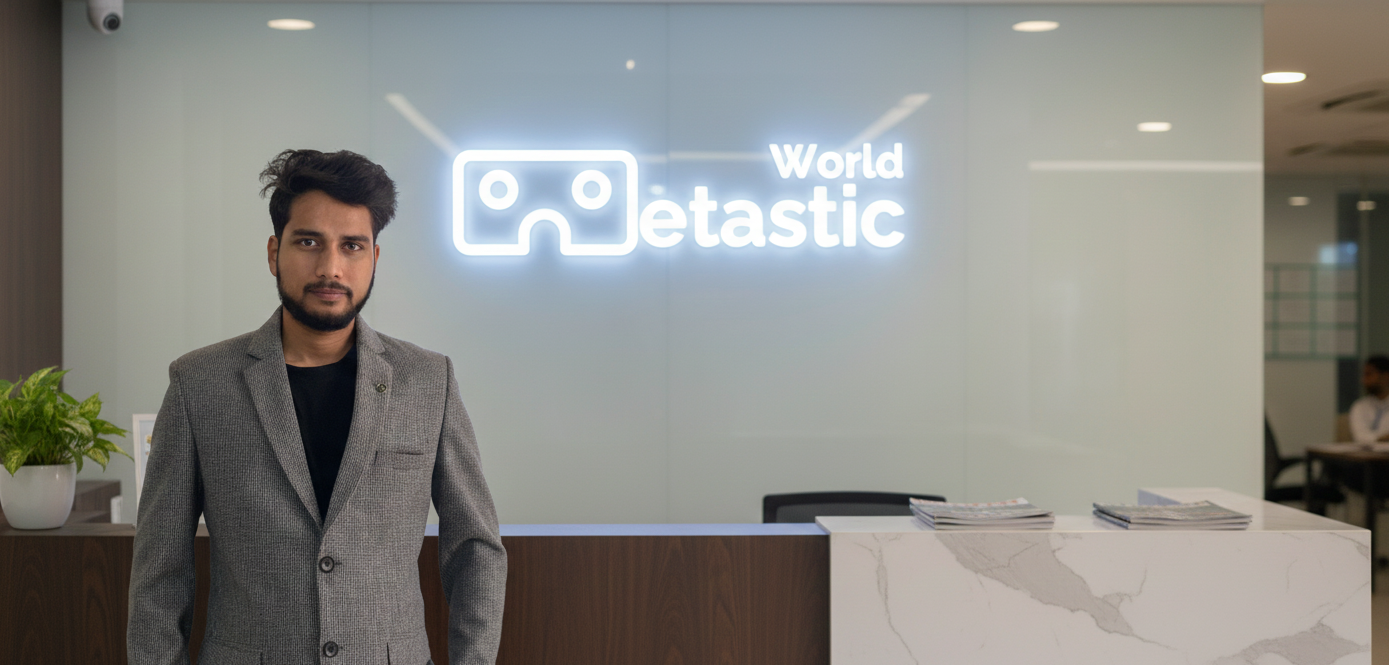
Director Cover

“Don’t overthink—just begin. Every great journey starts with a single step. I’ll stand with you, support you, and grow with you at every stage. That’s my promise, and I stand by it.”

Dheeraj Kumar Singh · CEO, Metastic World Private Limited

Areas of Expertise

End-to-End Digital Product Design, Engineering, and AI-Driven Innovation

Product Strategy & Experience Design

Crafting intuitive digital experiences through strategic wireframes, rapid MVP development, and high-fidelity prototypes to validate ideas before full-scale implementation.

Full-Cycle Product Engineering

Comprehensive design and development across cutting-edge platforms using modern technology stacks including Flutter, React Native, Java, Django, Python, Node.js, Next.js, and React.js.

Infrastructure Automation & Deployment Excellence

Streamlined CI/CD pipelines, multi-cloud orchestration, DevOps, and AIOps services ensuring scalable, secure, and resilient post-deployment environments.

AI & Machine Learning Enablement

End-to-end model training, optimization, and deployment handled by expert data scientists and ML engineers to unlock predictive intelligence and data-driven insights.

Intelligent API Ecosystem Integration

Seamless integration of third-party APIs, RESTful services, SOAP interfaces, and real-time workflows for robust interoperability and scalable system connectivity.

Business Process Automation & Autonomous AI Agents

From lead capture to customer support automation, optimizing entire workflows using AI-powered agents, CRM integrations, and intelligent decision-making systems.

Offshore Technology Operations & Managed Services

Comprehensive managed services and offshore development teams for cost-effective technology solutions.

EdgeCore Automation Systems (IoT)

Secure IoT device provisioning, edge AI, industrial protocols (MQTT/OPC‑UA), and fleet management.

Our Success matrix

As a leading development company, Metastic World ensures client satisfaction with on-time delivery, strict SLAs, high-quality deliverables, and strong client retention

  • Tailored engineering that fits your product, roadmap, and scale, ensuring every feature is built to match your long-term technical and business goals.

Custom Development & Professional Coding

We turn your ideas into reality with tailored web and mobile app solutions, backed by robust coding, system design, and documentation.

Our engineering teams design and build secure, maintainable software using modern architectures, clean patterns, and rigorous code review. From prototyping to production hardening, we provide documentation, testing, CI/CD, and performance tuning so your product ships reliably and scales with your growth.

Want to Become our Partner?

Join our network of successful partners and unlock new opportunities for growth and collaboration in the digital landscape.

Let's Collaborate