Describe Your Idea - Get an Instant Tech & Cost Estimate

Answer 2 quick questions to estimate your project cost.

Tech-Einblicke

Ihr Zugang zu den neuesten Technologiekenntnissen, Trends und Innovationen branchenübergreifend

Tech insight visualization

Transform Your Development Workflow with Human-AI Integration

The integration of AI into software development processes has the potential to revolutionize the way teams work. Tools like Human provide a comprehensive command line interface (CLI) that not only connects to various project management and development tools such as Jira, GitHub, and Notion but also optimizes the development pipeline from conception to deployment. With the ability to monitor running agents, manage token usage, and ensure seamless real-time tracking, Human allows development teams to enhance their productivity. It simplifies the coordination between multiple data sources while maintaining security and efficiency. With features like built-in code skills, a daemon for secure connections, and an easy setup process, teams can expect a frictionless onboarding experience. New members can access all necessary tools and configurations in a single install, ensuring that everyone is aligned from day one. Moreover, this framework eliminates common pain points in software development, such as broken dependencies and token limits, allowing development teams to focus on building and innovating without distraction. The automation capabilities of Human extend beyond simple coding tasks, covering the entire software lifecycle from planning to execution, review, and bug tracking. The AI-driven insights help refine ideas and produce actionable tickets, streamlining the feedback loop and improving deliverable quality. By integrating Human into their workflow, B2B tech companies in Europe can reap the benefits of an advanced solution that supports their digital transformation efforts.
Tech insight visualization

Understanding Multi-Agent Software Development and Consensus Problems

This article discusses the complexities involved in multi-agent software development, emphasizing the need for new programming languages that can effectively manage the coordination between large language models (LLMs). The author argues against the prevailing opinion that such languages are unnecessary, highlighting key principles from distributed systems literature. The premise is that every prompt sent to agents, such as creating an app to track recipes, is inherently underspecified and can lead to ambiguities in the software created by multiple agents working in parallel. Each agent must produce components that refine a common understanding of the prompt, presenting a distributed consensus challenge that must be resolved. The article connects these software development challenges back to established impossibility results in distributed systems, particularly referencing the foundational FLP theorem which indicates that in any distributed system facing node failures, achieving consensus is impossible. The formal modeling of this multi-agent synthesis illustrates that software development is not just a simple coding task. It involves managing varying degrees of interactions among agents, where design choices by one agent directly impact other agents and the overall final product. As agents take on tasks and make decisions, they create dependencies that necessitate communication and agreement on structural designs to ensure that the resulting software aligns with the original prompt. This complexity is underscored by the need for robust coordination workflows, critical for scaling multi-agent software development and effectively utilizing LLMs. Ultimately, the article serves as a call to action for acknowledgment of the fundamental coordination problems in multi-agent systems and encourages a reconsideration of how current methodologies can be adapted for future applications. By approaching software development as a consensus problem in distributed systems, the prospects for efficient, collaborative software engineering can expand significantly.
Tech insight visualization

AI-Enhanced Security Throughout the SDLC

This article discusses the integration of AI-driven security specialists into the Software Development Life Cycle (SDLC) to enhance code security effectively. With the increasing risks of cybersecurity threats, many organizations are struggling to ensure their software is secure from the initial phases to the final release. This system includes eight AI agents that specifically target various phases such as threat modeling, code review, and compliance checks. Each agent is designed to be utilized seamlessly within popular coding environments like Claude Code and Cursor, allowing for immediate security checks without extensive setup. This approach not only helps in the faster delivery of features, like a file upload function generated by an AI in under four minutes, but also underscores the necessity of combining speed with security, as many vulnerabilities have been overlooked in past breaches. Despite the efficiency offered by AI agents, it is emphasized that these do not replace human oversight. Output from these agents requires expert review, ensuring that any generated security artifacts are vetted by qualified personnel. The strategy behind this project is to reduce the burden on security teams while making security protocols more accessible and maintainable across development projects.
Tech insight visualization

Optimizing Software Development with Agent Teams and Claude Code

In the evolution of software development processes, utilizing Claude Code has opened new pathways for collaboration and efficiency. The author has experimented with employing small teams of agents, where each agent specializes in a specific role to effectively manage complex projects. The setup includes four distinct roles: the Product Manager (PM) refines project specifications; the Software Engineer (SWE) codes; the Tester (QA) validates the correctness; and the On-Call Engineer monitors CI/CD processes. This clear delineation of responsibilities helps prevent oversight and maintain accountability throughout the workflow. Using an orchestrator, tasks move through a structured sequence of creation, grooming, implementation, and verification, culminating in a final review by the PM. This methodology has been tested on various projects, confirming its potential to handle significant tasks effectively, streamlining the development cycle, and improving coordination.

Was unser Gründer sagt?

Unser Zweck ist es, modernste Technologie und menschliche Expertise zu vereinen, um Wachstum zu beschleunigen

Director Cover

“Don’t overthink—just begin. Every great journey starts with a single step. I’ll stand with you, support you, and grow with you at every stage. That’s my promise, and I stand by it.”

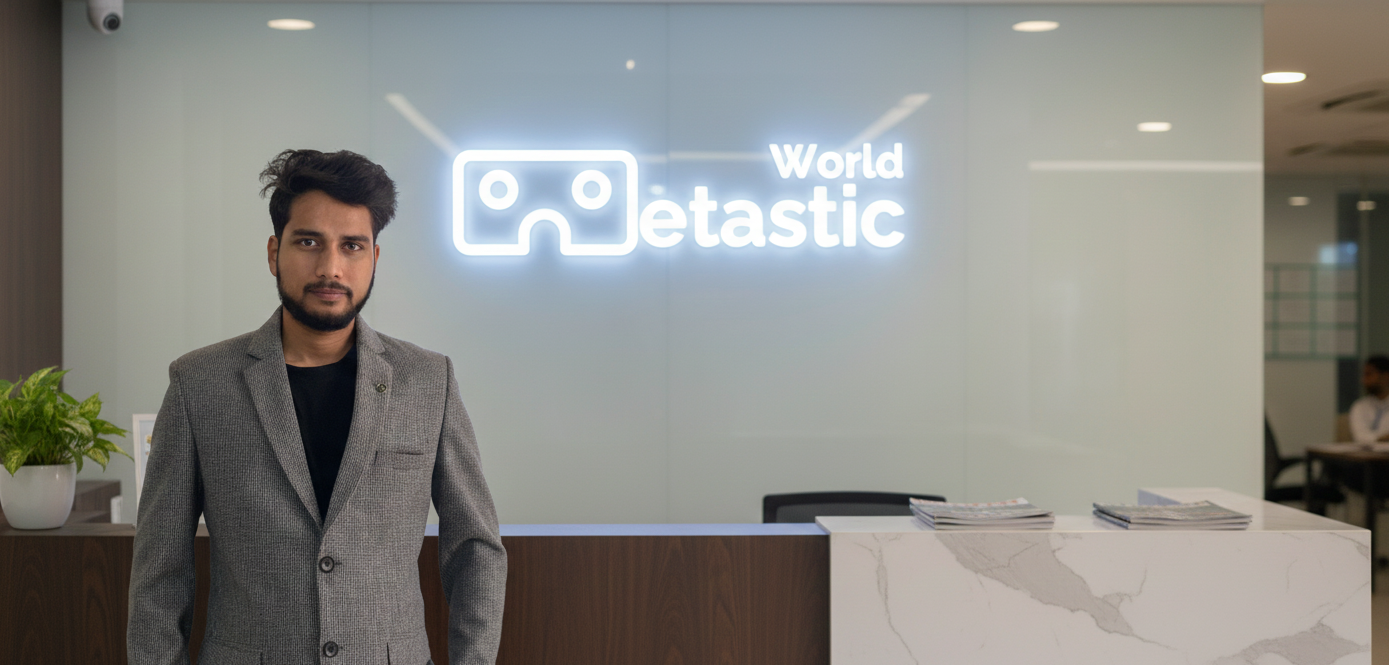
Dheeraj Kumar Singh · Gründer, Metastic World Private Limited

Fachbereiche

End-to-End Digitale Produktgestaltung, Engineering und KI-getriebene Innovation

Produktstrategie & Experience Design

Gestaltung intuitiver digitaler Erlebnisse durch strategische Wireframes, schnelle MVP-Entwicklung und High-Fidelity-Prototypen zur Ideenvalidierung vor der vollständigen Umsetzung.

Full-Cycle Product Engineering

Umfassendes Design und Entwicklung auf modernsten Plattformen mit modernen Technologie-Stacks einschließlich Flutter, React Native, Java, Django, Python, Node.js, Next.js und React.js.

Infrastrukturautomatisierung & Deployment Excellence

Optimierte CI/CD-Pipelines, Multi-Cloud-Orchestrierung, DevOps und AIOps-Services für skalierbare, sichere und resiliente Post-Deployment-Umgebungen.

KI- & Machine-Learning-Enablement

End-to-End-Modelltraining, -optimierung und -deployment durch erfahrene Data Scientists und ML-Engineers zur Freisetzung von prädiktiver Intelligenz und datengetriebenen Erkenntnissen.

Intelligente API-Ökosystem-Integration

Nahtlose Integration von Drittanbieter-APIs, RESTful-Services, SOAP-Schnittstellen und Echtzeit-Workflows für robuste Interoperabilität und skalierbare Systemkonnektivität.

Geschäftsprozessautomatisierung & Autonome KI-Agenten

Von der Lead-Erfassung bis zur Kundenbetreuungsautomatisierung, Optimierung ganzer Workflows mit KI-gestützten Agenten, CRM-Integrationen und intelligenten Entscheidungssystemen.

Offshore-Technologiebetrieb & Managed Services

Umfassende Managed Services und Offshore-Entwicklungsteams für kosteneffektive Technologielösungen.

EdgeCore Automationssysteme (IoT)

Sichere IoT-Gerätebereitstellung, Edge-KI, Industrieprotokolle (MQTT/OPC‑UA) und Flottenmanagement.

Our Success matrix

As a leading development company, Metastic World ensures client satisfaction with on-time delivery, strict SLAs, high-quality deliverables, and strong client retention

  • Maßgeschneiderte Entwicklung passend zu Produkt, Roadmap und Skalierung – damit jede Funktion deine langfristigen technischen und geschäftlichen Ziele unterstützt.

Individuelle Entwicklung & Professionelles Coding

Wir setzen deine Ideen in maßgeschneiderte Web‑ und Mobile‑Lösungen um – mit solidem Code, Systemdesign und Dokumentation.

Unsere Teams entwickeln sichere, wartbare Software mit modernen Architekturen, sauberen Patterns und strengen Code‑Reviews. Von Prototypen bis Produktionsreife liefern wir Doku, Tests, CI/CD und Performance‑Tuning, damit dein Produkt zuverlässig ausliefert und mitwächst.

Want to Become our Partner?

Join our network of successful partners and unlock new opportunities for growth and collaboration in the digital landscape.

Let's Collaborate